CALL 999 IN CASES OF EMERGENCY WHERE THERE IS A THREAT TO LIFE, PROPERTY, OR DISRUPTION TO ROADS AND THE GENERAL PUBLIC.
This section contains general building safety information, guidance and educational resources.
The information provided here is intended to help residents understand common building safety topics and may not relate specifically to your development.

Where you can get in touch with J&B depends on whether you are a Resident in a J&B-managed development, or a tenant in a J&B-managed rental unit.
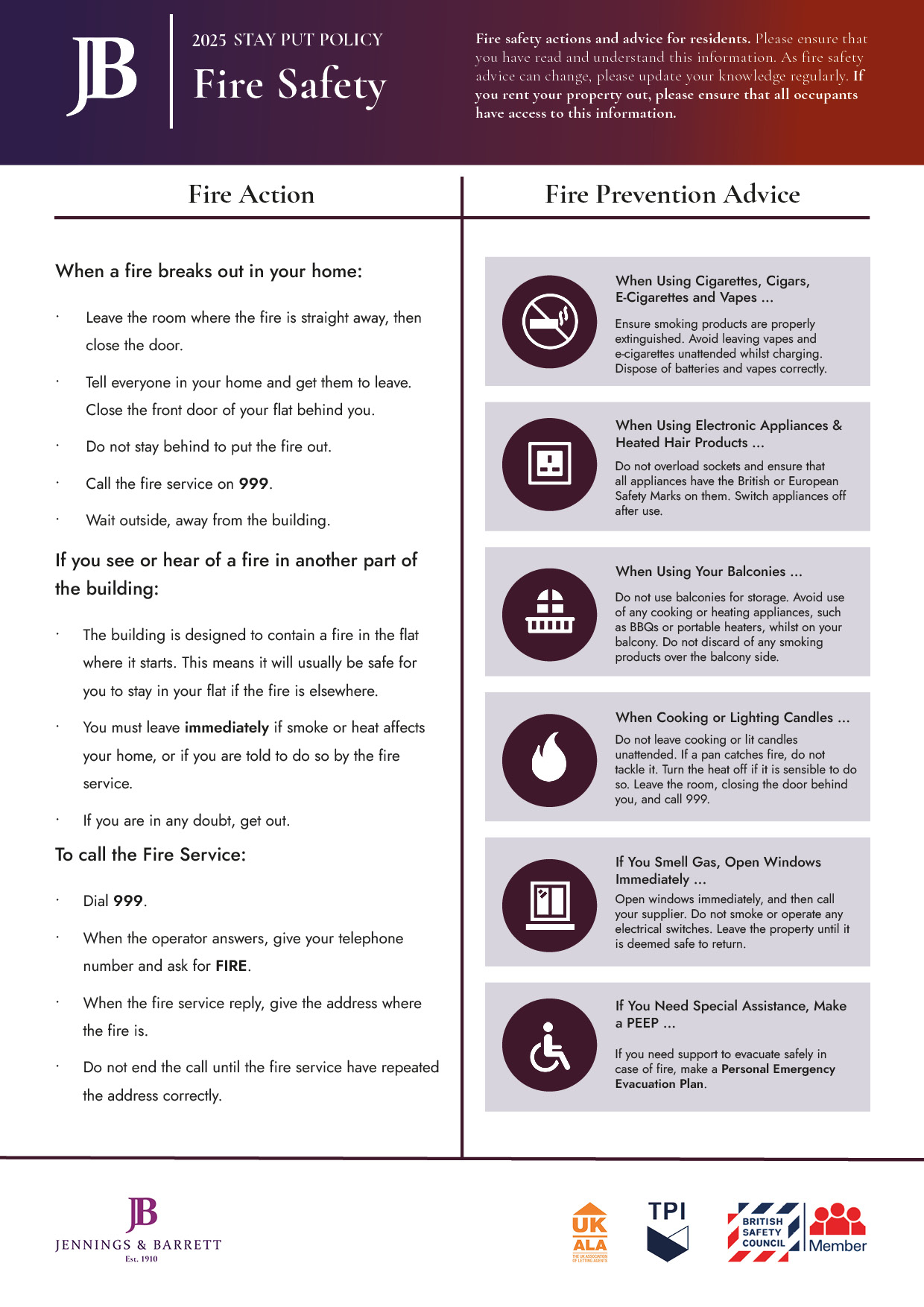
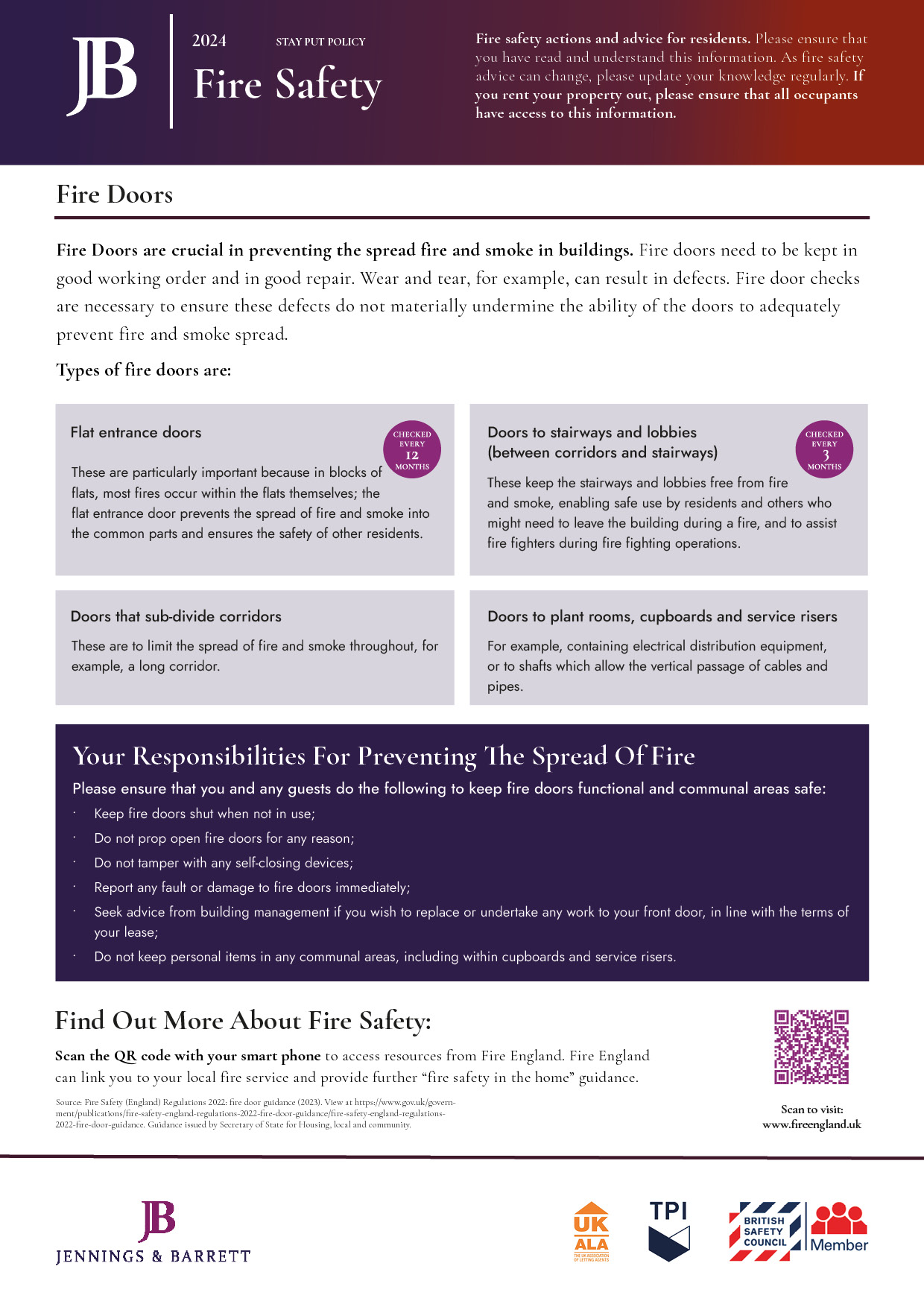
A "Stay Put" strategy keeps people safe when they are not in an area directly affected by the fire. If the fire is not in your unit or in a common area that you are occupying, you should remain in your unit / that area with the doors shut and windows closed.You are not legally obligated to stay put if you wish to leave in the event of a fire.If a fire breaks out within your unit or a common area that you are occupying, you should:
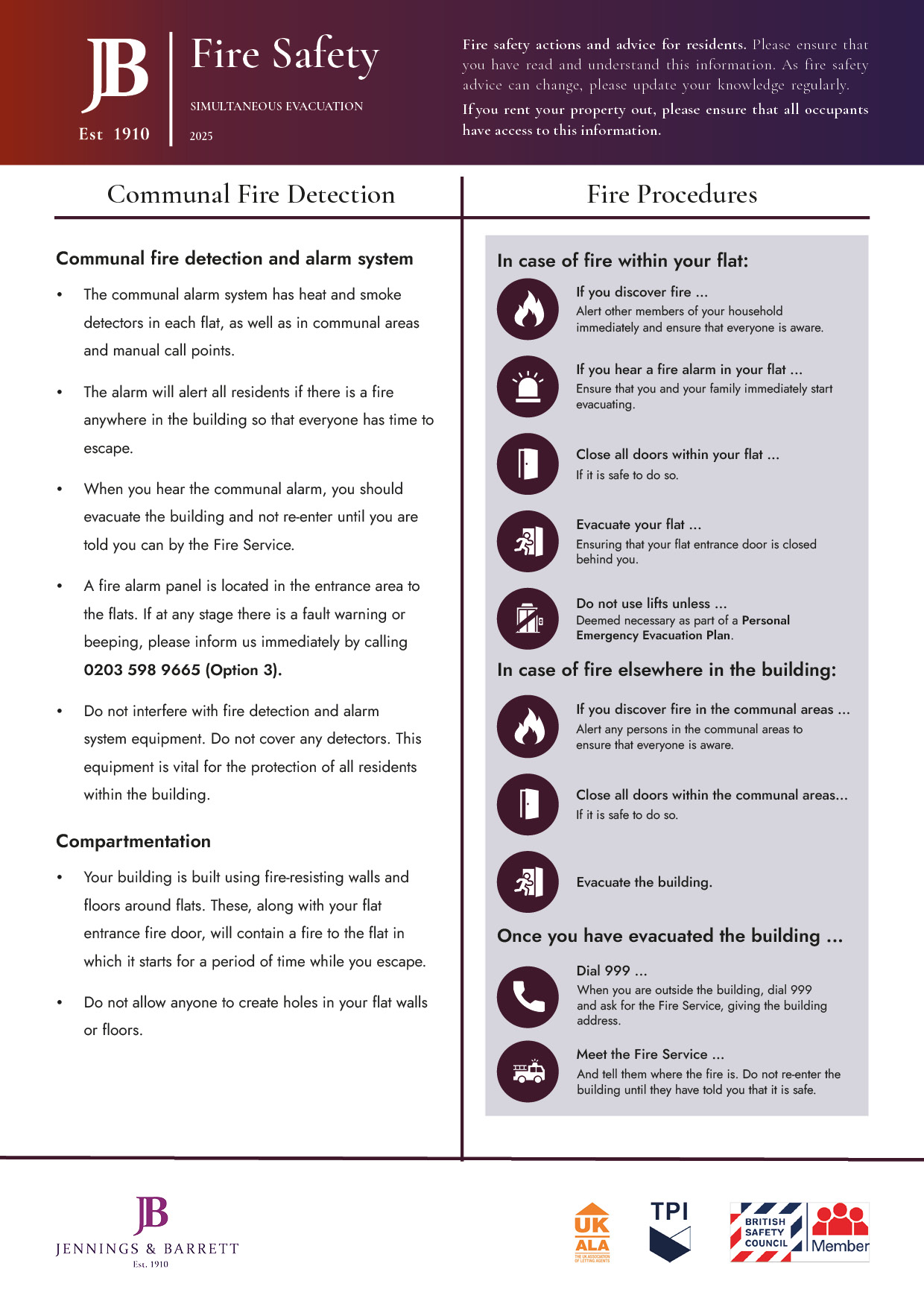
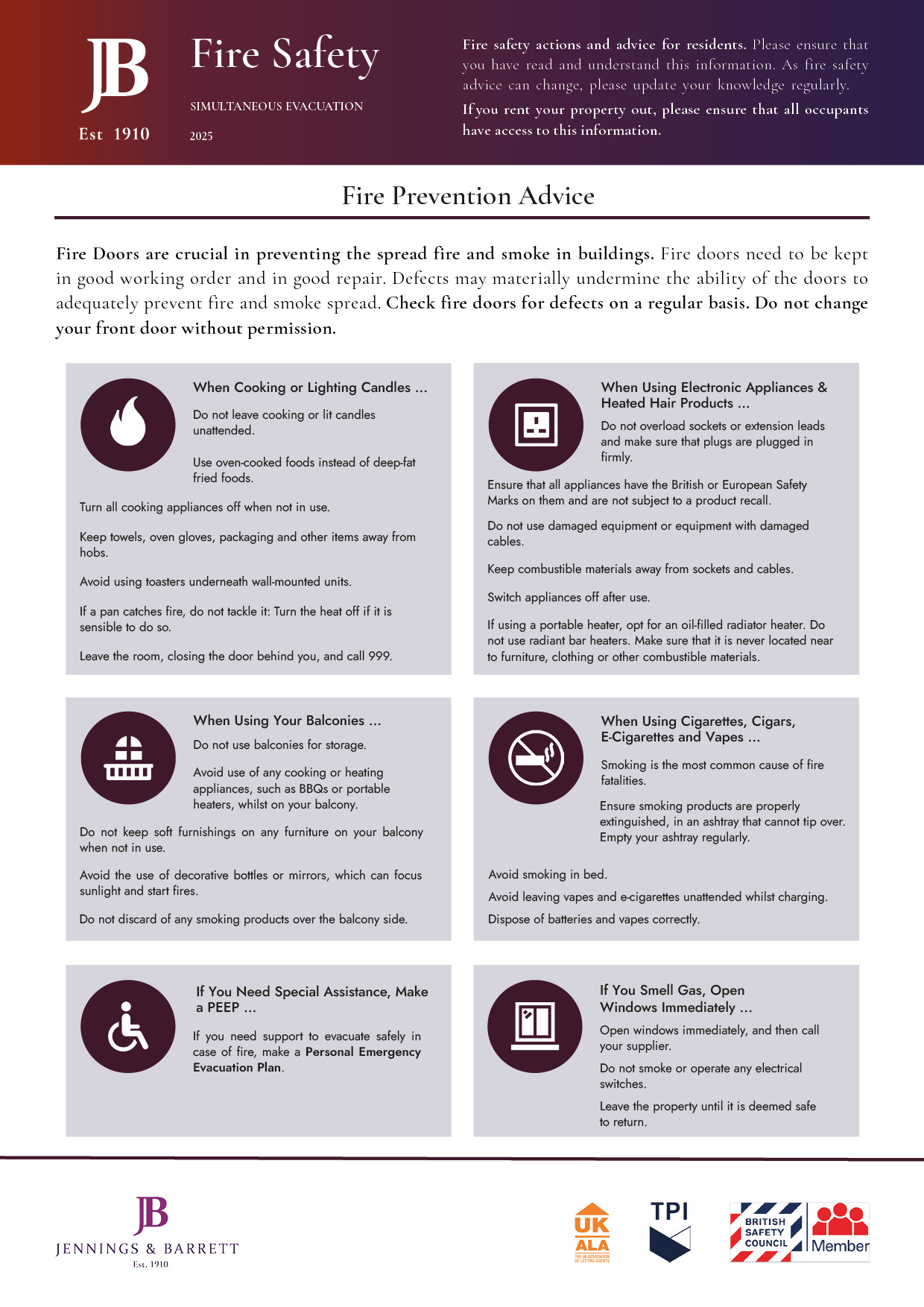
Simulatenous Evacuation Procedures are put in place because:
If your building has a Simultaneous Evacuation Strategy, in the event of a fire, all residents and occupants should evacuate the building.

A Personal Emergency Evacuation Plan (PEEP) is designed to support residents who may need assistance to safely evacuate the building during an emergency.
PEEPs are tailored to an individual's needs and may be appropriate for residents with mobility, sensory, communication, or other needs that could affect their ability to evacuate safely.
As part of our Resident Engagement Strategy, residents will be invited to complete a Resident Profile Survey each year. This helps identify whether a new PEEP may be required or whether an existing PEEP should be reviewed.
If your circumstances change, or you believe you may require a PEEP at any time, you do not need to wait for the annual survey.
To request a new PEEP or review an existing one, please select the "Request a PEEP" button below.
Under the Building Safety Act 2022, certain organisations or individuals have legal responsibilities for keeping high-rise residential buildings safe.
An Accountable Person (AP) is responsible for managing and maintaining the parts of the building they own or are responsible for.
The Principal Accountable Person (PAP) is the organisation or individual with overall responsibility for coordinating building safety across the building.
Together, they help to ensure that:
- The repair and maintenance of the common parts of a high-rise residential building
- The building's communal areas are properly maintained
- Fire and structural safety risks are identified and managed
- Building safety information is shared with residents
- Safety concerns raised by residents are considered and addressed.
If you have a building safety concern or would like further information about building safety, please contact: buildingsafety@jenningsandbarrett.co.uk

Everyone has a role to play in helping keep the development safe.
Residents and leaseholders can help by:
Additional Responsibilities for Leaseholders Who Let Their Property
If you rent your property to tenants, you should:
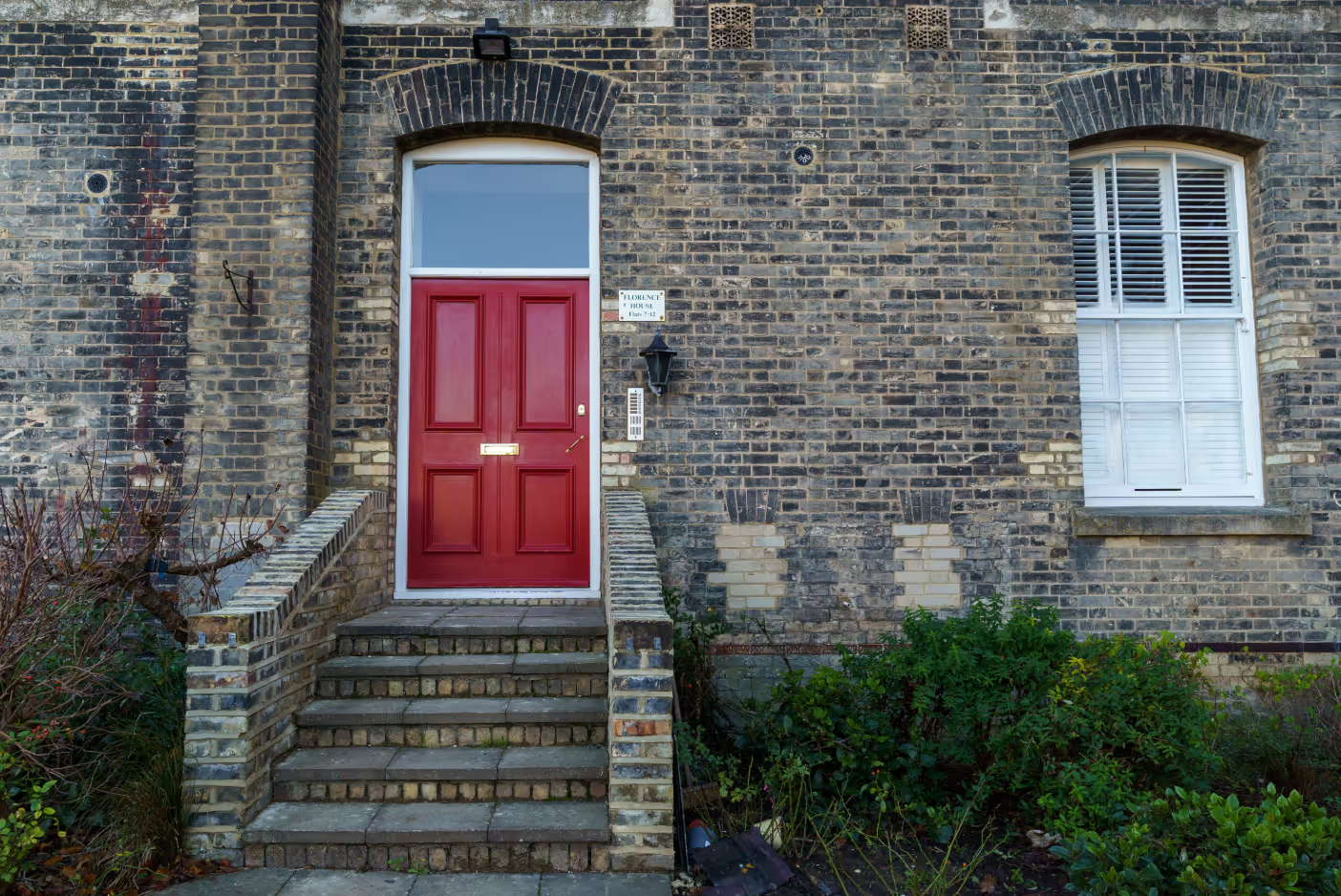
Fire door safety information for all residents
In accordance with Regulation 10 of the Fire Safety (England) Regulations 2022, all residents are informed of their duties and the safety requirements relating to fire doors within the building.
Fire doors are an essential part of the building’s fire safety system. They are designed to restrict the spread of fire and smoke, protect evacuation routes, and preserve life. Their purpose is to enable safe evacuation and provide essential protection to communal escape routes used by residents and emergency services. To help maintain safety within the building, all residents are reminded of their legal responsibilities in relation to fire doors and are asked to ensure that:
Your flat entrance door is also part of the building’s fire safety system, helping to protect both your flat and the wider building. Should you wish to make any alterations, replacements, or adjustments, please contact Jennings and Barrett for guidance first, as all changes must be reviewed and approved in advance to ensure compliance with fire safety regulations and the safety of all residents
We appreciate your cooperation in following these guidelines, which help keep the building and all residents safe in the event of a fire. If you have any questions or notice a defect, please contact us at block@jenningsandbarrett.co.uk.
Note: This is provided in line with UK fire safety requirements, including relevant legislation such as the Regulatory Reform (Fire Safety) Order 2005, the Fire Safety Act 2021, the Fire Safety (England) Regulations 2022, and Building Regulations Approved Document B (Fire Safety).

Please use the below resources to increase your knowledge about fire safety in your home, and to perform a free home safety check online.
Want to have your building's information available at the touch of a button? Here's generic guidance on how to save your platform as an app on your smartphone or tablet.
Please note that some features may distort when using your platform on a smartphone or tablet.